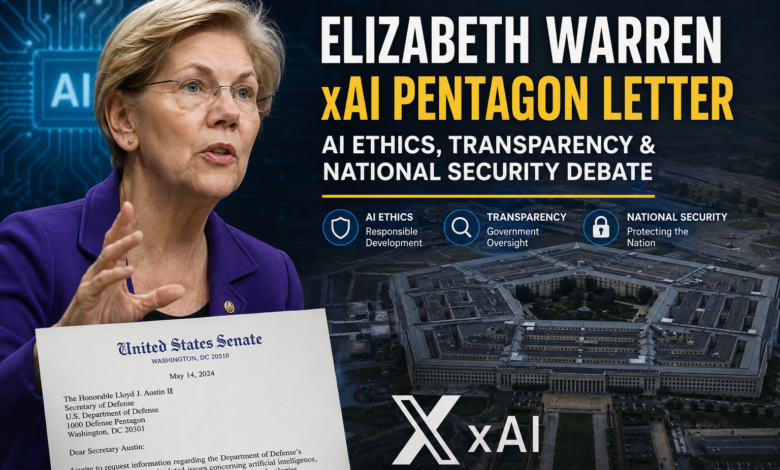
Artificial intelligence (AI) is rapidly becoming a strategic technology for governments, businesses, and defense organizations around the world. As AI systems become more capable, questions about transparency, accountability, national security, and ethical use have moved to the center of public debate. One topic that has attracted significant attention is the Elizabeth Warren xAI Pentagon letter, which highlights concerns about the relationship between advanced AI companies and government agencies.
The discussion surrounding this topic reflects a broader conversation about how AI should be developed, regulated, and deployed—especially when national defense and public resources are involved. Policymakers, technology companies, and security experts all play important roles in ensuring that innovation is balanced with public trust and responsible governance.
This article explores the background of the Elizabeth Warren xAI Pentagon letter, why it matters, the issues it raises, and what it could mean for the future of AI policy.
Understanding the Background
Artificial intelligence has become a key priority for governments because of its potential to improve defense capabilities, cybersecurity, logistics, intelligence analysis, and decision-making. As private technology companies continue developing increasingly powerful AI models, government agencies often collaborate with them on research, software, and cloud infrastructure.
Whenever these partnerships involve sensitive public institutions, lawmakers frequently ask questions about transparency, procurement processes, ethical standards, and conflicts of interest. The discussion around the Elizabeth Warren xAI Pentagon letter reflects these broader concerns.
Rather than opposing technological innovation itself, policymakers often seek clear explanations regarding how public funds are used, how contracts are awarded, and what safeguards exist to protect national interests.
Why AI Matters to National Security
Artificial intelligence is transforming defense operations in several important ways.
Intelligence Analysis
AI systems can process enormous amounts of information much faster than traditional methods, helping analysts identify patterns and emerging risks.
Cybersecurity
Government agencies increasingly rely on AI-powered security systems to detect cyber threats, identify unusual network activity, and respond to attacks more quickly.
Logistics and Planning
Machine learning can improve supply chain management, equipment maintenance, transportation planning, and resource allocation.
Decision Support
AI tools assist military planners by organizing data, generating simulations, and providing analytical recommendations that support human decision-makers.
Although these applications offer significant advantages, they also require careful oversight to ensure responsible use.
The Importance of Transparency
One of the central themes connected with discussions about AI partnerships is transparency.
Citizens expect government agencies to explain:
- How technology contracts are awarded.
- How taxpayer money is spent.
- What oversight mechanisms exist.
- How sensitive information is protected.
- Which ethical standards guide AI deployment.
Transparency helps strengthen public confidence while encouraging responsible innovation.
Ethical Questions Raised by AI Partnerships
As AI technology becomes more influential, several ethical questions continue to receive attention.
Accountability
Organizations should clearly identify who is responsible for decisions made with AI-assisted systems.
Data Privacy
Government projects often involve sensitive information. Strong security measures are essential to protect confidential data.
Fair Competition
Technology procurement should encourage open competition while following established legal and ethical standards.
Human Oversight
Experts generally agree that important decisions affecting national security should continue to involve qualified human judgment rather than relying entirely on automated systems.
The Role of Policymakers
Lawmakers play an essential role in overseeing emerging technologies. Their responsibilities include:
- Reviewing government contracts.
- Requesting information from agencies.
- Evaluating potential risks.
- Protecting taxpayer interests.
- Supporting responsible innovation.
- Encouraging transparency and accountability.
Oversight does not necessarily slow innovation. Instead, it can help build public trust by ensuring that technological progress follows appropriate legal and ethical standards.
Balancing Innovation and Regulation
Technology companies continue pushing the boundaries of AI research. At the same time, governments must ensure that innovation develops responsibly.
An effective balance often includes:
- Encouraging private-sector innovation.
- Protecting national security.
- Supporting ethical AI development.
- Maintaining competitive technology markets.
- Promoting public transparency.
- Establishing clear regulatory frameworks.
Finding this balance is one of the most significant challenges facing policymakers today.
Why This Discussion Matters
The conversation surrounding the Elizabeth Warren xAI Pentagon letter extends beyond a single company or government agency. It represents a broader debate about how advanced artificial intelligence should interact with public institutions.
As AI becomes increasingly integrated into defense, healthcare, education, finance, and transportation, governments worldwide will continue developing policies that encourage innovation while protecting public interests.
Citizens, businesses, researchers, and policymakers all benefit from transparent discussions about how emerging technologies are developed, funded, and governed.
Challenges in AI Governance
Artificial intelligence offers remarkable opportunities, but it also introduces complex governance challenges. As governments and private technology companies work together, they must address legal, ethical, and operational issues to ensure AI is used responsibly.
Maintaining Public Trust
Public confidence is essential when advanced technologies are adopted by government agencies. Clear communication about procurement processes, oversight mechanisms, and the intended use of AI systems helps strengthen trust and accountability.
Protecting Sensitive Information
Defense-related AI projects often involve confidential data. Strong cybersecurity practices, secure infrastructure, and strict access controls are necessary to safeguard sensitive information from unauthorized access or cyber threats.
Keeping Regulations Up to Date
AI technology evolves much faster than traditional legislation. Policymakers must regularly review and update regulations so they remain effective without unnecessarily slowing innovation.
International Competition
Many countries are investing heavily in artificial intelligence for economic growth and national security. Governments face the challenge of encouraging innovation while maintaining ethical standards and protecting national interests.
Best Practices for Responsible AI
Organizations developing or deploying AI systems can benefit from following widely accepted principles of responsible AI.
Transparency
Explain how AI systems are used, what data they rely on, and the goals they are designed to achieve whenever appropriate.
Human Oversight
Important decisions—especially those involving national security, public safety, or legal consequences—should remain under meaningful human supervision.
Security by Design
Security should be integrated into AI systems from the beginning, including encryption, regular testing, and continuous monitoring for vulnerabilities.
Fairness and Accountability
AI systems should be evaluated to reduce bias and ensure that organizations remain accountable for outcomes influenced by automated tools.
Continuous Monitoring
AI models should be reviewed and updated regularly to maintain accuracy, reliability, and compliance with evolving regulations and ethical standards.
The Future of AI Policy
The debate highlighted by the Elizabeth Warren xAI Pentagon letter is part of a much larger conversation about the future of artificial intelligence.
Future policy discussions are likely to focus on:
- Clear standards for government AI procurement.
- Greater transparency in public-private technology partnerships.
- Ethical guidelines for AI development and deployment.
- Stronger cybersecurity requirements.
- Independent oversight of high-impact AI systems.
- International cooperation on AI governance.
As AI becomes more capable, governments around the world will continue balancing technological innovation with public accountability and national security.
Why This Topic Is Important
Discussions about AI and government partnerships affect more than technology companies. They influence businesses, researchers, policymakers, and citizens who depend on secure, reliable, and transparent public institutions.
Understanding these issues helps readers appreciate how AI is shaping the future of defense, public administration, and digital innovation. It also encourages informed discussions about how emerging technologies should be governed.
Conclusion
The Elizabeth Warren xAI Pentagon letter has become part of a broader conversation about artificial intelligence, government oversight, and national security. As AI continues to play a larger role in defense and public services, questions about transparency, accountability, ethics, and procurement are likely to remain important.
Responsible AI development requires collaboration between governments, technology companies, researchers, and policymakers. By promoting openness, strong security practices, and meaningful oversight, it is possible to encourage innovation while protecting the public interest.
As artificial intelligence continues to evolve, thoughtful governance will remain essential to ensuring that these powerful technologies are developed and used in ways that benefit society.
Frequently Asked Questions (FAQs)
What is the Elizabeth Warren xAI Pentagon letter about?
The topic refers to public discussion surrounding oversight, transparency, and questions raised about AI-related interactions involving xAI and the Pentagon.
Why are AI partnerships with governments important?
They can support national security, cybersecurity, logistics, research, and operational efficiency while requiring appropriate oversight and accountability.
Why is transparency important in AI projects?
Transparency helps build public trust, explains how public resources are used, and supports responsible decision-making.
What are the biggest AI governance challenges?
Key challenges include protecting sensitive data, maintaining accountability, addressing ethical concerns, updating regulations, and ensuring meaningful human oversight.
What is responsible AI?
Responsible AI emphasizes fairness, transparency, security, accountability, privacy protection, and human supervision throughout the development and deployment of AI systems.