Mindjumpers: Digital Marketing, Innovation, and Online Business Growth

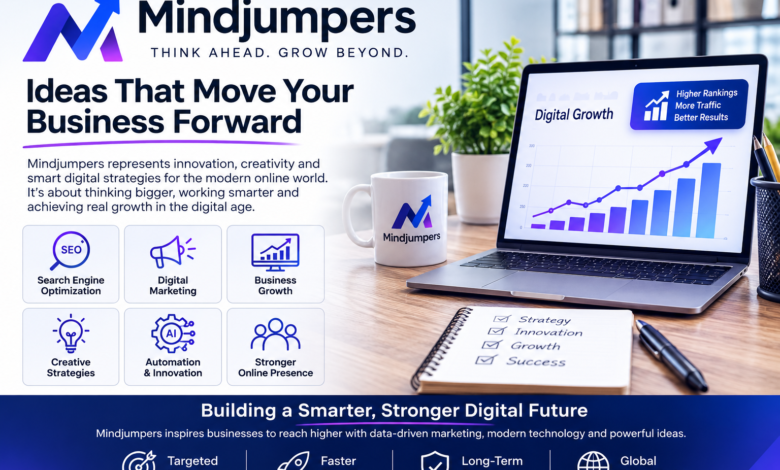
The digital world continues to change how businesses communicate with customers, promote their services, and build recognizable brands. As companies move more of their operations online, marketing agencies and digital specialists have become increasingly important. One name that attracts online interest is Mindjumpers.
Mindjumpers can be explored from the broader perspective of digital marketing, online communication, creative strategy, and business growth. However, when researching a specific company or brand, readers should separate verified information from assumptions. A strong article should explain the topic clearly without inventing details about services, clients, or company history.
This guide looks at the idea behind Mindjumpers, its relevance to modern digital marketing, and the strategies businesses can use to improve their online presence.
What Is Mindjumpers?
Mindjumpers is a distinctive name that can attract searches from people looking for information about a particular business, digital service, or online brand. Because businesses can change their websites, services, and positioning over time, current sources remain important when researching a specific organization.
From a digital marketing perspective, the name also fits naturally into a discussion about creative thinking and modern online business strategies. Successful digital marketing requires companies to understand their audiences, communicate useful messages, and adapt to changing technology.
Therefore, businesses that want to compete online need more than basic advertising. They need a complete strategy that combines content, search visibility, social media, website performance, and customer engagement.
Why Digital Marketing Matters
Digital marketing gives businesses several ways to reach potential customers.
Traditional advertising can still play an important role, but online channels allow businesses to measure performance more closely. Marketers can track website visits, clicks, leads, conversions, and customer engagement.
For example, a business can use:
- Search engine optimization
- Paid advertising
- Social media marketing
- Email marketing
- Content marketing
- Video marketing
- Website optimization
- Analytics
Each channel serves a different purpose. However, combining them can create a stronger overall marketing strategy.
The Importance of a Strong Website
A company’s website often serves as the central point of its digital presence. Visitors may discover a business through Google, social media, advertisements, or referrals before arriving at the website.
Consequently, the website needs to provide a clear and useful experience.
A strong business website should have:
- Simple navigation
- Fast loading speeds
- Mobile-friendly design
- Clear service information
- Strong calls to action
- Useful content
- Trust-building information
- Secure browsing
A confusing website can cause visitors to leave before they contact the business.
Search Engine Optimization
SEO remains one of the most valuable long-term digital marketing strategies.
Search engine optimization helps businesses improve their visibility when people search for relevant products, services, or information.
A successful SEO strategy can include:
Keyword Research
Marketers identify search terms that potential customers actually use.
Content Creation
Businesses publish useful articles, guides, FAQs, and other resources that answer customer questions.
On-Page Optimization
Titles, headings, descriptions, URLs, internal links, and content structure can help search engines understand a webpage.
Technical SEO
Website speed, mobile compatibility, crawlability, and structured data can influence search performance.
Authority Building
Quality references and relevant links can strengthen a website’s authority when they come from trustworthy sources.
Content Marketing
Content marketing focuses on providing useful information instead of relying entirely on direct advertising.
A business might publish:
- Blog articles
- Tutorials
- Industry guides
- Case studies
- Videos
- Infographics
- Frequently asked questions
- Product comparisons
Useful content can attract visitors at different stages of the buying process.
For example, someone researching a problem may discover an educational article first. Later, that visitor may return when they are ready to purchase a product or service.
Social Media Strategy
Social media gives brands another way to communicate with their audiences.
Platforms such as Facebook, Instagram, LinkedIn, TikTok, and X can help businesses share updates, educational content, product information, and company news.
However, effective social media marketing requires consistency.
Businesses should focus on:
- Understanding their target audience
- Publishing useful content
- Responding to customers
- Maintaining consistent branding
- Testing different content formats
- Monitoring engagement
Simply posting frequently does not guarantee results. The quality and relevance of the content matter just as much.
Paid Advertising
Paid advertising can help businesses reach audiences quickly.
Platforms such as Google Ads and social advertising networks allow marketers to target users according to factors such as search behavior, interests, location, and demographics.
However, businesses should monitor advertising costs carefully.
A successful paid campaign should track:
- Click-through rate
- Cost per click
- Conversion rate
- Cost per lead
- Customer acquisition cost
- Return on advertising spend
These metrics help businesses understand whether advertising generates meaningful results.
Building Brand Recognition
Brand recognition develops when customers repeatedly encounter consistent messages, visuals, and experiences.
A recognizable brand typically maintains consistency across:
- Website design
- Logo usage
- Social media
- Advertising
- Written communication
- Customer service
Consistency makes it easier for customers to remember a company and distinguish it from competitors.
The Role of Analytics
Digital marketing produces large amounts of data. Businesses can use analytics platforms to understand how visitors interact with their websites and campaigns.
Useful information can include:
- Traffic sources
- Popular pages
- Visitor behavior
- Conversion paths
- Search queries
- Campaign performance
- Geographic data
However, collecting data alone does not improve marketing. Businesses need to analyze the information and turn it into practical decisions.
Artificial Intelligence and Marketing
Artificial intelligence has become an increasingly important part of digital marketing.
AI tools can assist marketers with tasks such as:
- Content research
- Audience analysis
- Data interpretation
- Campaign optimization
- Customer support
- Personalization
- Workflow automation
Nevertheless, businesses should combine AI with human oversight. Automated systems can process information quickly, but human marketers still need to evaluate brand voice, customer needs, accuracy, and strategic priorities.
Automation and Business Efficiency
Marketing automation can reduce repetitive work and help teams manage campaigns more efficiently.
Businesses can automate activities such as:
- Email sequences
- Lead notifications
- Customer follow-ups
- Reporting
- Social media scheduling
- Data synchronization
Automation allows employees to spend more time on strategy and creative work.
However, companies should automate tasks carefully. Poorly designed automation can create unnecessary messages or frustrating customer experiences.
Customer Experience
Digital marketing should ultimately support the customer experience.
A company may attract thousands of visitors, but those visitors will not become loyal customers if the business provides a poor experience.
Businesses should make it easy for customers to:
- Find information.
- Understand the offer.
- Compare options.
- Ask questions.
- Complete a purchase or inquiry.
- Receive support.
A smooth customer journey can increase trust and encourage repeat business.
Digital Marketing Trends
The digital marketing industry continues to evolve.
Several important trends include:
AI-Powered Personalization
Businesses increasingly use data and AI to deliver more relevant content and recommendations.
Short-Form Video
Short videos remain an effective format for grabbing attention and explaining products or services quickly.
Voice and Conversational Search
Customers increasingly interact with search and digital assistants using natural language.
First-Party Data
Businesses are placing greater emphasis on information collected directly from customers and website visitors.
Privacy-Focused Marketing
Companies need to balance personalization with responsible data collection and privacy practices.
How Businesses Can Improve Their Online Presence
Companies do not need to implement every marketing channel at once.
Instead, they can start with a clear process.
First, identify the target audience. Next, understand the problems that audience wants to solve. Then, create useful content and optimize the website around relevant search terms.
After that, businesses can introduce paid advertising and social media campaigns where appropriate.
Finally, they should measure results and improve their strategy based on real performance data.
Conclusion
Mindjumpers provides an interesting starting point for exploring the wider world of digital marketing, online growth, creativity, and business technology. As competition increases across digital channels, companies need strategies that combine strong websites, useful content, SEO, social media, paid advertising, analytics, and customer-focused experiences.
At the same time, businesses should avoid chasing every new technology without considering whether it supports their goals. AI and automation can improve efficiency, but strategy and customer understanding remain essential.
Ultimately, successful digital marketing comes from understanding people, delivering useful information, measuring results, and continuously improving. Whether a business is building a new brand or strengthening an established online presence, these principles can provide a strong foundation for sustainable digital growth.
Frequently Asked Questions
What is Mindjumpers?
Mindjumpers is a search term associated with a brand or business name. Specific information about the organization should be verified through current official sources.
Why is digital marketing important?
Digital marketing helps businesses reach customers through search engines, websites, social media, email, online advertising, and other digital channels.
How does SEO help a business?
SEO can improve a website’s visibility in search results and help attract people who are actively looking for relevant information, products, or services.
Can AI improve digital marketing?
Yes. AI can assist with research, analysis, personalization, automation, and campaign optimization. However, marketers should maintain human oversight.
What makes a successful digital marketing strategy?
A successful strategy combines clear goals, audience research, useful content, strong website performance, appropriate marketing channels, accurate measurement, and continuous improvement.