Mti america job postings sdr revops marketing automation lead routing

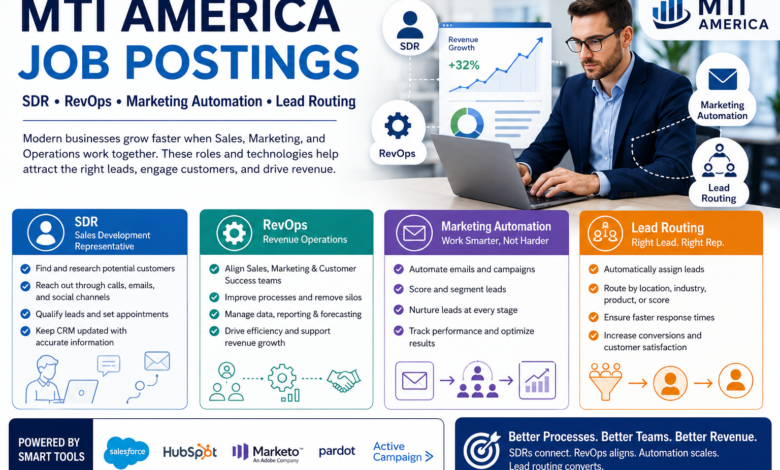
Modern businesses rely on technology to improve sales, marketing, and customer engagement. As organizations grow, they generate more leads through websites, digital advertising, email campaigns, webinars, and social media. Managing these leads efficiently has become a major priority, making Revenue Operations (RevOps), Sales Development Representatives (SDRs), marketing automation, and intelligent lead routing essential components of today’s sales process.
The growing interest in MTI America Job Postings SDR RevOps Marketing Automation Lead Routing reflects the increasing demand for professionals who can optimize revenue operations and improve business performance through automation. Companies seek skilled individuals who understand customer relationship management (CRM), workflow automation, data analysis, and sales technology.
This article explores the meaning of this keyword, the responsibilities of RevOps professionals, the role of SDRs, the importance of marketing automation, and how lead routing contributes to business success.
Understanding Revenue Operations (RevOps)
Revenue Operations, commonly known as RevOps, is a business strategy that aligns sales, marketing, and customer success teams. Instead of operating independently, these departments work together using shared processes, technology, and performance metrics.
The primary goals of RevOps include:
- Improving revenue growth
- Enhancing collaboration
- Standardizing business processes
- Increasing operational efficiency
- Improving customer experiences
- Using data for better decision-making
RevOps has become increasingly important because modern businesses rely on multiple digital channels to attract and retain customers.
What Does an SDR Do?
A Sales Development Representative (SDR) focuses on identifying and qualifying potential customers before they are handed to sales representatives.
Typical SDR responsibilities include:
Lead Qualification
Evaluating whether potential customers match the company’s target audience.
Prospect Research
Learning about organizations, industries, and decision-makers before initiating contact.
Initial Outreach
Communicating with prospects through email, phone calls, social media, or professional networking platforms.
Appointment Scheduling
Booking meetings between qualified prospects and account executives.
CRM Management
Updating customer records to ensure accurate tracking throughout the sales process.
By handling early-stage customer engagement, SDRs allow sales teams to concentrate on closing business opportunities.
Marketing Automation Explained
Marketing automation refers to software that automates repetitive marketing activities while delivering personalized customer experiences.
Common marketing automation features include:
- Email campaigns
- Customer segmentation
- Lead scoring
- Landing pages
- Workflow automation
- Campaign tracking
- Behavioral analytics
- Customer nurturing
Automation helps businesses communicate with prospects at the right time while reducing manual effort.
Benefits of Marketing Automation
Organizations implementing automation often experience measurable improvements.
Improved Productivity
Marketing teams spend less time performing repetitive administrative tasks.
Better Customer Engagement
Automated campaigns deliver personalized messages based on customer interests and behavior.
Consistent Communication
Workflows ensure customers receive timely follow-up messages throughout the buying journey.
Better Reporting
Marketing platforms provide detailed analytics that measure campaign performance and customer engagement.
What Is Lead Routing?
Lead routing is the process of automatically assigning incoming leads to the appropriate sales representative or team.
Instead of manually reviewing every inquiry, businesses use predefined rules to distribute leads based on specific criteria.
Common routing factors include:
- Geographic location
- Industry
- Company size
- Product interest
- Language preference
- Sales territory
- Customer type
- Lead score
Proper lead routing ensures faster responses and improves the likelihood of converting prospects into customers.
Why Lead Routing Matters
Fast responses significantly improve customer experiences.
Benefits include:
Faster Response Times
Qualified leads reach the correct representative immediately.
Higher Conversion Rates
Quick follow-up increases the chances of successful customer engagement.
Balanced Workloads
Automated assignment distributes opportunities fairly among sales representatives.
Better Customer Experience
Customers communicate with specialists best suited to their needs.
Improved Sales Efficiency
Sales teams spend less time manually sorting leads and more time building customer relationships.
CRM Systems and Revenue Operations
Customer Relationship Management (CRM) platforms serve as the foundation of modern RevOps strategies.
Popular CRM capabilities include:
- Contact management
- Sales pipelines
- Activity tracking
- Reporting dashboards
- Opportunity management
- Workflow automation
- Marketing integration
- Customer history
Centralized customer information improves collaboration across departments.
Essential Skills for RevOps Professionals
Professionals working in Revenue Operations often combine technical knowledge with business strategy.
Important skills include:
Data Analysis
Interpreting reports to identify trends and opportunities.
Process Optimization
Improving workflows that support sales and marketing operations.
CRM Administration
Managing customer databases and ensuring data quality.
Communication
Working effectively across sales, marketing, customer success, and leadership teams.
Problem-Solving
Identifying operational bottlenecks and implementing practical improvements.
Marketing and Sales Alignment
One of the biggest advantages of RevOps is improved collaboration between marketing and sales.
Marketing teams focus on generating qualified leads, while SDRs evaluate those prospects before transferring them to sales representatives.
When both teams share the same technology, reporting, and performance metrics, organizations often experience:
- Better lead quality
- Higher conversion rates
- Improved forecasting
- Greater customer satisfaction
- Increased revenue growth
This alignment reduces communication gaps and creates a smoother customer journey from initial interest to long-term engagement.
The Role of Artificial Intelligence in Revenue Operations
Artificial intelligence (AI) is becoming an essential part of Revenue Operations. While traditional automation follows predefined rules, AI can analyze large amounts of data, recognize patterns, and support faster decision-making.
Businesses use AI in RevOps to:
- Predict customer behavior
- Score leads based on buying intent
- Recommend the next best action for sales teams
- Analyze marketing campaign performance
- Improve sales forecasting
- Detect trends in customer interactions
When AI is combined with marketing automation and CRM platforms, organizations can respond to opportunities more quickly while improving the overall customer experience.
How Marketing Automation Improves Business Performance
Marketing automation helps businesses deliver consistent communication throughout the customer journey.
For example, when a visitor downloads an eBook or fills out a contact form, the automation platform can:
- Send a personalized welcome email
- Assign the lead to a nurturing campaign
- Notify the appropriate SDR
- Update the CRM automatically
- Track customer engagement
- Schedule follow-up activities
This streamlined process reduces manual work while ensuring that potential customers receive timely communication.
Best Practices for Lead Routing
Effective lead routing is essential for maximizing sales opportunities. Organizations should establish clear rules that ensure every lead reaches the right representative without unnecessary delays.
Recommended practices include:
Define Routing Rules
Assign leads based on location, industry, company size, product interest, or language preference.
Use Lead Scoring
Prioritize high-quality prospects by evaluating factors such as engagement, job role, and purchase intent.
Keep CRM Data Updated
Accurate customer information improves routing decisions and reduces duplicate records.
Monitor Performance
Regularly review response times, conversion rates, and routing accuracy to identify areas for improvement.
Automate Notifications
Instant alerts help SDRs respond quickly to new opportunities, increasing the likelihood of successful engagement.
Skills Required for RevOps and Marketing Automation Roles
Professionals working in Revenue Operations and marketing automation typically combine technical expertise with analytical and communication skills.
Important skills include:
- CRM administration
- Marketing automation platforms
- Data analysis
- Process improvement
- Workflow design
- SQL or reporting tools
- Business intelligence
- Project management
- Communication
- Problem-solving
Continuous learning is valuable because sales technology and automation platforms evolve rapidly.
Career Opportunities
As businesses continue investing in digital transformation, demand for professionals with RevOps and automation expertise continues to grow.
Common roles include:
- Revenue Operations Specialist
- Revenue Operations Manager
- Sales Operations Analyst
- Marketing Automation Specialist
- CRM Administrator
- Business Systems Analyst
- Sales Development Representative (SDR)
- Demand Generation Specialist
- Customer Success Operations Manager
- Marketing Operations Manager
These positions often involve improving business processes, supporting revenue growth, and helping organizations make better use of technology.
Common Challenges
Although automation provides many benefits, organizations may face several implementation challenges.
Data Quality Issues
Incomplete or outdated CRM data can reduce the effectiveness of automation and lead routing.
System Integration
Connecting multiple software platforms requires careful planning to ensure data flows correctly between systems.
Employee Adoption
Successful implementation depends on proper training and clear communication so employees understand new workflows.
Process Complexity
Automating inefficient processes may simply increase inefficiency. Businesses should optimize workflows before automating them.
Security and Compliance
Organizations must protect customer information by implementing strong security controls and following applicable privacy regulations.
Future Trends in Revenue Operations
Revenue Operations continues to evolve alongside advances in technology.
Some important trends include:
- AI-powered forecasting
- Predictive lead scoring
- Intelligent workflow automation
- Real-time sales analytics
- Advanced customer journey mapping
- Improved CRM integrations
- Conversational AI assistants
- Enhanced reporting dashboards
Businesses that adopt these innovations can improve operational efficiency and create more personalized customer experiences.
Why RevOps Matters
RevOps creates a unified strategy that connects marketing, sales, and customer success teams.
Instead of working independently, departments share:
- Business goals
- Performance metrics
- Customer data
- Reporting systems
- Technology platforms
- Operational processes
This alignment reduces communication gaps, improves collaboration, and helps organizations deliver a smoother customer journey from first contact to long-term customer relationships.
Conclusion
The growing interest in MTI America Job Postings SDR RevOps Marketing Automation Lead Routing reflects the increasing importance of Revenue Operations, marketing automation, and intelligent lead management in modern organizations.
Businesses rely on these technologies to improve collaboration, automate repetitive tasks, increase conversion rates, and deliver better customer experiences. At the same time, professionals with expertise in CRM systems, automation platforms, analytics, and workflow optimization are becoming valuable contributors to business success.
As digital transformation continues, Revenue Operations will remain a key driver of sustainable growth, helping organizations align teams, make data-driven decisions, and build stronger relationships with customers.
Frequently Asked Questions
What is Revenue Operations (RevOps)?
Revenue Operations is a business approach that aligns sales, marketing, and customer success teams to improve efficiency and revenue growth.
What does an SDR do?
A Sales Development Representative identifies, qualifies, and nurtures potential customers before passing qualified leads to the sales team.
What is marketing automation?
Marketing automation uses software to automate marketing tasks such as email campaigns, lead nurturing, customer segmentation, and campaign tracking.
Why is lead routing important?
Lead routing ensures new prospects are assigned to the right sales representative quickly, improving response times and conversion rates.
Which industries use RevOps?
Technology companies, healthcare organizations, manufacturing businesses, financial institutions, retail companies, and many other industries use Revenue Operations to improve business performance and customer engagement.