Businesses today depend on technology to stay competitive, improve efficiency, and manage daily operations more effectively. Whether it is handling customer relationships, tracking finances, managing employees, or organizing projects, the right software can make a significant difference. As digital transformation continues to reshape industries, organizations are increasingly looking for reliable business software solutions that simplify complex tasks.
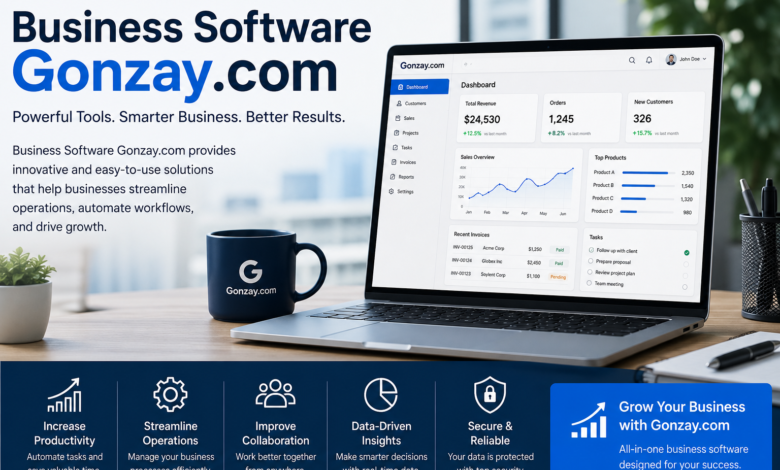
The growing interest in Business Software Gonzay.com reflects the demand for modern tools that support productivity, collaboration, and business growth. Companies of all sizes are adopting software platforms to automate repetitive work, improve communication, and make data-driven decisions.
This guide explains the importance of business software, its key features, benefits, common applications, implementation strategies, challenges, and future trends.
What Is Business Software?
Business software is a collection of digital applications designed to help organizations perform daily activities more efficiently. These applications reduce manual work, improve accuracy, and support better decision-making.
Business software can assist with:
- Customer relationship management
- Accounting and finance
- Inventory management
- Human resources
- Project management
- Marketing
- Sales tracking
- Team collaboration
- Document management
- Business reporting
Instead of using separate manual processes, businesses can manage multiple operations from integrated software platforms.
Understanding Business Software Gonzay.com
The keyword Business Software Gonzay.com represents interest in business software solutions that help organizations improve operational efficiency through digital tools and workflow automation.
Modern business software focuses on simplifying routine tasks while providing valuable insights through reporting and analytics. By reducing repetitive work, businesses can improve productivity and allow employees to focus on strategic objectives.
Why Business Software Matters
Technology has become an essential part of business success. Manual processes often consume valuable time and increase the risk of errors.
Business software provides several advantages.
Improved Productivity
Employees spend less time performing repetitive tasks and more time contributing to business growth.
Better Organization
Information is stored in one place, making it easier to access documents, customer records, and reports.
Enhanced Collaboration
Teams can communicate, share files, and manage projects more effectively using cloud-based software.
Faster Decision-Making
Business dashboards and analytics help managers make informed decisions based on real-time information.
Reduced Costs
Automation lowers operational expenses by minimizing manual work and improving efficiency.
Key Features of Modern Business Software
Businesses often evaluate software based on the features it offers.
Workflow Automation
Routine processes such as approvals, notifications, and data entry can be completed automatically.
Cloud Access
Cloud-based platforms allow employees to work securely from anywhere with an internet connection.
Reporting and Analytics
Businesses gain valuable insights through customizable reports and performance dashboards.
Data Security
Modern software includes user permissions, encryption, backups, and security monitoring to protect sensitive information.
Integration
Business software often connects with accounting systems, CRM platforms, email services, and productivity applications.
Mobile Accessibility
Many business applications include mobile versions that allow employees to stay productive while working remotely.
Benefits of Business Software Gonzay.com
Organizations implementing business software often experience measurable improvements.
Increased Efficiency
Automation reduces repetitive work and speeds up daily operations.
Higher Accuracy
Digital systems reduce human errors in calculations, reporting, and record keeping.
Improved Customer Service
Customer information is easier to access, allowing faster responses and better support.
Better Financial Management
Accounting features help businesses monitor expenses, revenue, invoices, and budgets more effectively.
Business Growth
Scalable software supports expanding operations without significantly increasing administrative workload.
Common Types of Business Software
Businesses use different software depending on their operational needs.
Customer Relationship Management (CRM)
CRM software helps manage customer interactions, sales opportunities, and communication history.
Enterprise Resource Planning (ERP)
ERP systems integrate finance, inventory, procurement, and operations into a unified platform.
Accounting Software
Accounting applications simplify bookkeeping, invoicing, payroll, tax preparation, and financial reporting.
Project Management Software
Project management tools organize tasks, deadlines, team collaboration, and project tracking.
Human Resource Management
HR software manages employee records, recruitment, attendance, payroll, and performance evaluations.
Inventory Management
Inventory software tracks stock levels, purchases, warehouses, and product availability.
Industries That Use Business Software
Business software supports organizations across many industries.
Healthcare
Hospitals and clinics use software for scheduling, billing, patient records, and administration.
Retail
Retail businesses manage inventory, sales, customer loyalty, and online orders.
Manufacturing
Manufacturers use software for production planning, supply chain management, and quality control.
Education
Schools and universities manage admissions, student information, attendance, and communication.
Financial Services
Banks and financial institutions rely on software for compliance, reporting, transactions, and customer account management.
Choosing the Right Business Software
Before investing in any business software, organizations should evaluate several factors.
- Business requirements
- Ease of use
- Security features
- Integration capabilities
- Customer support
- Scalability
- Pricing
- Vendor reputation
Selecting software that aligns with business goals increases the chances of successful implementation and long-term value.
How to Successfully Implement Business Software
Implementing business software is more than simply installing a program. Organizations should carefully plan the process to ensure the software supports their goals and integrates smoothly into daily operations.
Identify Business Needs
The first step is to understand the challenges the business wants to solve. Whether the goal is improving customer service, managing finances, increasing productivity, or automating repetitive tasks, identifying clear objectives helps in selecting the right software.
Choose the Right Solution
Different businesses have different requirements. Small businesses may prefer simple cloud-based applications, while larger organizations may need enterprise-level software with advanced features and integrations.
Prepare Data
Before moving to a new system, businesses should organize and clean their existing data. Accurate information improves software performance and reduces migration problems.
Train Employees
Employees should receive proper training so they understand how to use the software effectively. Well-trained teams adapt more quickly and make better use of available features.
Monitor Performance
After implementation, businesses should regularly review software performance, gather employee feedback, and make improvements where needed.
Challenges Businesses May Face
While business software provides many advantages, implementation may also bring certain challenges.
Initial Costs
Purchasing software licenses, training employees, and migrating data may require an initial investment. However, these costs are often balanced by long-term efficiency and productivity gains.
User Adoption
Some employees may be reluctant to adopt new systems. Clear communication, training, and ongoing support help increase user acceptance.
Data Security
Business software often stores valuable company information. Organizations should choose solutions that include encryption, access controls, regular backups, and security updates.
System Integration
Businesses using older software may need additional planning to integrate new applications with existing systems.
Maintenance
Software requires updates, monitoring, and occasional improvements to ensure long-term reliability and security.
Best Practices for Using Business Software
Organizations can maximize the value of business software by following these best practices:
- Select software that matches business goals.
- Keep business data organized and accurate.
- Train employees regularly.
- Monitor system performance.
- Back up important information frequently.
- Review software updates and security patches.
- Evaluate new features that improve productivity.
- Encourage collaboration between departments.
Following these practices helps businesses gain the greatest return on their software investment.
Future Trends in Business Software
Business software continues to evolve as technology advances. Several trends are shaping the future of digital business management.
Artificial Intelligence
AI-powered software is helping businesses automate repetitive tasks, analyze data, and provide intelligent recommendations.
Cloud Computing
Cloud-based platforms continue to grow because they provide flexibility, remote access, and lower infrastructure costs.
Automation
Workflow automation is becoming a standard feature, reducing manual work and improving operational efficiency.
Data Analytics
Businesses increasingly rely on dashboards and real-time analytics to monitor performance and make informed decisions.
Mobile Business Solutions
Mobile applications allow employees to manage tasks, communicate, and access important information from virtually anywhere.
Cybersecurity Improvements
As businesses rely more on digital tools, software developers continue strengthening security features to protect sensitive information.
Why Business Software Is Essential
Modern organizations operate in highly competitive environments where efficiency and speed are critical. Business software helps companies improve communication, simplify operations, and make better decisions through accurate data and automation.
Whether managing customers, finances, projects, or employees, software solutions reduce manual effort and improve overall productivity. Businesses that embrace digital tools are often better prepared to adapt to changing market demands and customer expectations.
Conclusion
The increasing interest in Business Software Gonzay.com reflects the growing importance of technology in modern business management. Digital software solutions help organizations automate workflows, improve collaboration, organize information, and enhance productivity.
Choosing the right business software depends on understanding organizational needs, selecting reliable solutions, and ensuring employees receive proper training. When implemented successfully, business software supports operational efficiency, improves customer satisfaction, and enables sustainable business growth.
As technology continues to evolve, businesses that invest in modern software solutions will be better positioned to innovate, compete, and succeed in an increasingly digital economy.
Frequently Asked Questions (FAQs)
What is Business Software Gonzay.com?
It refers to business software solutions and technologies that help organizations manage operations, improve productivity, and automate business processes.
Why is business software important?
Business software improves efficiency, reduces manual work, enhances collaboration, and supports better decision-making through data and automation.
Which industries use business software?
Healthcare, retail, manufacturing, education, finance, logistics, hospitality, and many other industries use business software to improve operations.
Can small businesses benefit from business software?
Yes. Many affordable cloud-based solutions are designed specifically for small and medium-sized businesses, helping them manage operations more efficiently.
What features should businesses look for?
Important features include workflow automation, cloud access, reporting, analytics, security, integration with existing tools, mobile accessibility, and scalability.