Healthcare organizations are under constant pressure to improve operational efficiency, reduce administrative costs, and deliver better patient experiences. As hospitals and healthcare providers handle growing volumes of clinical and financial data, automation has become an essential part of modern healthcare operations.
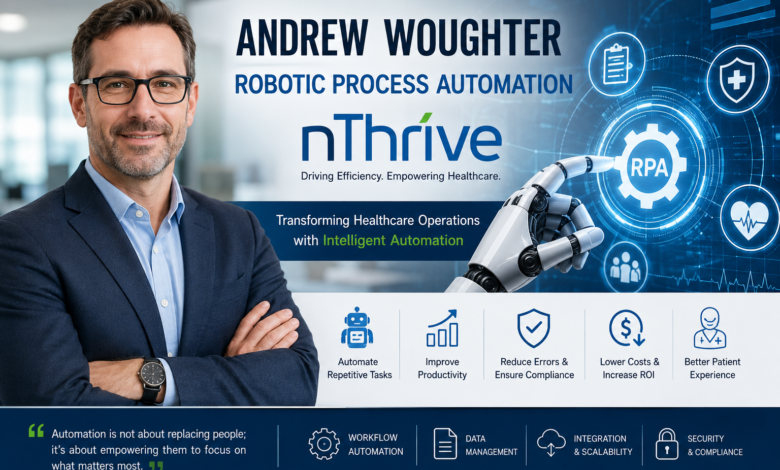
One topic attracting interest is Andrew Woughter Robotic Process Automation nThrive, which is associated with discussions about robotic process automation (RPA), healthcare technology, and digital transformation. RPA enables organizations to automate repetitive, rule-based tasks, allowing employees to focus on higher-value work while improving speed and accuracy.
This article explores the importance of robotic process automation, how healthcare organizations benefit from automation, and the role of digital innovation in creating more efficient healthcare systems.
Understanding Robotic Process Automation (RPA)
Robotic Process Automation is a technology that uses software bots to perform repetitive digital tasks. Unlike physical robots, RPA software works inside computer systems by interacting with applications in much the same way as a human user.
Common RPA tasks include:
- Data entry
- Invoice processing
- Appointment scheduling
- Claims processing
- Report generation
- Email notifications
- Form validation
- Database updates
- Workflow management
Because these activities follow defined rules, they are ideal candidates for automation.
The Importance of Automation in Healthcare
Healthcare organizations process enormous amounts of administrative information every day. Manual handling of repetitive tasks can consume valuable staff time and increase the likelihood of errors.
Automation helps healthcare providers by:
Improving Efficiency
Software bots perform routine tasks around the clock, reducing delays and increasing productivity.
Reducing Human Error
Automated workflows minimize mistakes caused by manual data entry and repetitive processing.
Supporting Healthcare Staff
Automation allows healthcare professionals to spend more time on patient care instead of administrative work.
Faster Processing
Routine activities such as billing, documentation, and scheduling can be completed much more quickly through automated workflows.
nThrive and Healthcare Technology
Healthcare technology platforms focus on improving operational performance through digital solutions that support financial management, revenue cycle processes, compliance, and workflow optimization.
Organizations using modern healthcare software often benefit from:
- Better workflow visibility
- Faster document processing
- Improved reporting
- Secure data management
- Enhanced collaboration
- More efficient administrative operations
Digital transformation enables healthcare providers to improve both internal operations and patient experiences.
Key Benefits of Robotic Process Automation
Increased Productivity
Software bots can work continuously without breaks, completing repetitive tasks quickly and consistently.
Cost Savings
Automation reduces the time spent on manual administrative work, helping organizations optimize operational costs.
Better Compliance
Automated workflows follow predefined rules, helping organizations maintain consistent processes and support regulatory compliance.
Improved Data Accuracy
Bots transfer information directly between systems, reducing transcription errors and improving data quality.
Employee Satisfaction
When repetitive work is automated, employees can focus on problem-solving, patient support, and other high-value responsibilities.
Common Healthcare Processes Suitable for Automation
Many healthcare workflows are ideal for robotic process automation.
Patient Registration
Automation can verify information, populate digital forms, and reduce registration time.
Appointment Scheduling
Software bots can manage scheduling requests, confirmations, reminders, and cancellations.
Medical Billing
Automation helps process invoices, verify insurance information, and prepare financial documentation.
Claims Processing
RPA speeds up insurance claims by collecting information, validating data, and routing submissions through established workflows.
Revenue Cycle Management
Healthcare organizations use automation to improve billing accuracy, payment tracking, and financial reporting.
Artificial Intelligence and RPA
Although RPA automates rule-based tasks, artificial intelligence expands automation by enabling systems to interpret data, recognize patterns, and support decision-making.
Together, AI and RPA can:
- Process documents using intelligent recognition
- Classify incoming requests
- Analyze operational trends
- Improve customer support
- Prioritize workflows
- Assist with predictive analytics
The combination of AI and automation creates more flexible and intelligent business processes.
Security and Data Protection
Healthcare organizations manage highly sensitive information. Any automation initiative should include strong security measures to protect patient and organizational data.
Important security practices include:
- Role-based access controls
- Multi-factor authentication
- Data encryption
- Audit logging
- Regular software updates
- Continuous monitoring
Strong cybersecurity supports compliance while protecting confidential information from unauthorized access.
Digital Transformation in Healthcare
Digital transformation is about more than adopting new software. It involves redesigning workflows to improve efficiency, collaboration, and service quality.
Organizations embracing digital transformation often focus on:
- Cloud-based systems
- Workflow automation
- Electronic records
- Business analytics
- Secure communication
- Operational efficiency
These technologies help healthcare providers adapt to changing demands while delivering higher-quality services.