Artificial Intelligence (AI) droven io ai automation tools is rapidly changing the way businesses operate. From customer service and marketing to data analysis and workflow management, organizations are increasingly turning to automation to improve efficiency and reduce manual effort. As competition grows across industries, companies need smarter solutions that help them save time, optimize resources, and make better decisions.
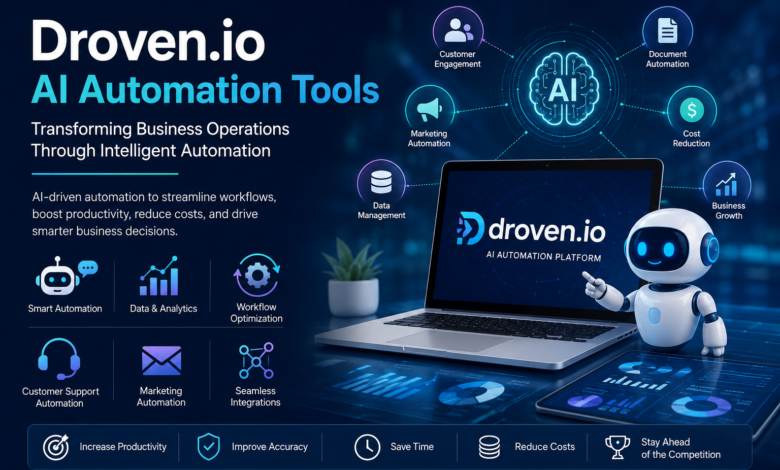
One emerging name in this space is Droven.io AI Automation Tools. AI automation platforms are designed to streamline repetitive tasks, improve productivity, and enable organizations to focus on strategic initiatives rather than routine operations. By combining artificial intelligence, machine learning, and workflow automation, these tools help businesses achieve greater efficiency while maintaining accuracy and consistency.
This article explores the role of Droven.io AI Automation Tools, their potential benefits, key applications, and how AI-driven automation is shaping the future of business operations.
Understanding AI Automation
AI automation refers to the use of artificial intelligence technologies to perform tasks with minimal human intervention. Unlike traditional automation, which follows predefined rules, AI-powered systems can learn from data, recognize patterns, and make intelligent decisions.
AI automation can handle a wide range of activities, including:
- Data processing
- Customer support
- Marketing campaigns
- Workflow management
- Report generation
- Business analytics
- Content creation
- Lead qualification
The goal is to reduce repetitive work while improving speed, accuracy, and overall business performance.
What Are Droven.io AI Automation Tools?
Droven.io AI Automation Tools can be understood as solutions designed to help businesses automate workflows, optimize processes, and leverage artificial intelligence for improved decision-making.
Modern organizations often deal with:
- Large volumes of data
- Multiple software platforms
- Repetitive administrative tasks
- Customer communication challenges
- Resource management complexities
AI automation platforms address these issues by connecting systems, automating processes, and delivering actionable insights.
Instead of relying on manual processes, businesses can create intelligent workflows that operate continuously and efficiently.
Why Businesses Need AI Automation
Digital transformation has increased the demand for faster and more efficient operations.
Organizations that fail to automate may face challenges such as:
- Higher operational costs
- Slower response times
- Increased human errors
- Reduced productivity
- Limited scalability
AI automation helps overcome these obstacles while supporting business growth.
Increased Productivity
Employees can focus on strategic tasks instead of repetitive work.
Reduced Costs
Automation lowers labor-intensive workloads and operational expenses.
Improved Accuracy
AI systems minimize errors associated with manual processes.
Faster Decision-Making
Real-time data analysis supports quicker and more informed decisions.
Enhanced Customer Experience
Automated systems provide faster responses and personalized interactions.
These advantages make AI automation a valuable investment for modern organizations.
Key Features of AI Automation Platforms
Effective AI automation tools often include several core capabilities.
Workflow Automation
Organizations can automate routine processes across departments.
Examples include:
- Employee onboarding
- Invoice processing
- Customer support workflows
- Document approvals
Automation improves efficiency and consistency.
Artificial Intelligence Integration
AI capabilities enable systems to learn, adapt, and improve over time.
Applications include:
- Predictive analytics
- Intelligent recommendations
- Natural language processing
- Machine learning models
Data Management
AI automation tools can collect, organize, and analyze data from multiple sources.
This helps businesses gain valuable insights and improve decision-making.
System Integration
Modern businesses use various software applications.
AI automation platforms often connect:
- CRM systems
- Marketing platforms
- Financial software
- Project management tools
- Communication platforms
Seamless integration improves workflow efficiency.
AI Automation in Marketing
Marketing departments increasingly rely on automation to manage campaigns and engage customers.
Common applications include:
Email Marketing Automation
AI can schedule, personalize, and optimize email campaigns.
Lead Scoring
Machine learning algorithms identify high-potential prospects.
Customer Segmentation
Automation helps group audiences based on behavior and preferences.
Content Recommendations
AI delivers personalized content to improve engagement.
These capabilities help marketers achieve better results while reducing manual effort.
Customer Support Automation
Customer service is one of the most popular use cases for AI automation.
Benefits include:
AI Chatbots
Chatbots provide instant responses to customer inquiries.
Automated Ticket Routing
Support requests can be directed to the appropriate department automatically.
Knowledge Base Assistance
AI helps customers find answers without human intervention.
24/7 Availability
Automated systems can provide support around the clock.
These improvements enhance customer satisfaction and reduce support costs.
Data Analytics and Business Intelligence
Data is one of the most valuable assets for modern organizations.
AI automation tools help businesses transform raw information into actionable insights.
Predictive Analytics
Organizations can forecast trends and anticipate future outcomes.
Performance Monitoring
AI continuously tracks key metrics and performance indicators.
Real-Time Reporting
Automated reporting reduces delays and improves visibility.
Decision Support
Business leaders receive data-driven recommendations.
These capabilities help organizations make smarter strategic decisions.
Benefits for Small and Large Businesses
AI automation is not limited to large enterprises.
Small Businesses
Smaller organizations can:
- Reduce manual workloads
- Improve efficiency
- Enhance customer service
- Scale operations more effectively
Large Enterprises
Larger companies can:
- Manage complex workflows
- Process massive datasets
- Improve collaboration
- Optimize resource allocation
Regardless of size, businesses can benefit from intelligent automation.
Challenges of AI Automation
Although AI automation offers significant advantages, organizations should be aware of potential challenges.
Data Quality
Poor-quality data can reduce AI effectiveness.
Integration Complexity
Connecting multiple systems may require careful planning.
Employee Training
Staff members need to understand and adapt to new technologies.
Security Concerns
Organizations must protect sensitive data and maintain compliance.
Change Management
Successful implementation requires strong leadership and communication.
Addressing these challenges helps maximize automation success.
Future Trends in AI Automation
The AI automation landscape continues evolving rapidly.
Several trends are expected to shape the future.
Generative AI
Generative AI tools are becoming increasingly useful for content creation and productivity.
Hyperautomation
Businesses are automating entire workflows rather than individual tasks.
Intelligent Decision-Making
AI systems are providing more advanced recommendations and insights.
Voice-Based Automation
Natural language interfaces are becoming more common.
Industry-Specific Solutions
Automation platforms are increasingly tailored to specific industries and business needs.
These innovations will continue expanding the capabilities of AI automation.
Why AI Automation Matters
Organizations face increasing pressure to improve efficiency, reduce costs, and deliver exceptional customer experiences.
AI automation helps businesses:
- Work smarter
- Scale faster
- Reduce errors
- Improve productivity
- Enhance competitiveness
Companies that adopt intelligent automation early often gain significant advantages over competitors.
As digital transformation accelerates, AI automation will become an essential component of business success.
Conclusion
Droven.io AI Automation Tools represent the growing importance of intelligent automation in today’s business environment. By combining artificial intelligence, workflow automation, data analytics, and machine learning, organizations can streamline operations and unlock new opportunities for growth.
From marketing and customer service to analytics and business intelligence, AI automation offers practical solutions for improving efficiency and decision-making. While implementation requires careful planning and ongoing optimization, the long-term benefits can be substantial.
As technology continues advancing, AI automation platforms like Droven.io will play an increasingly important role in helping businesses adapt, innovate, and thrive in a competitive digital economy.