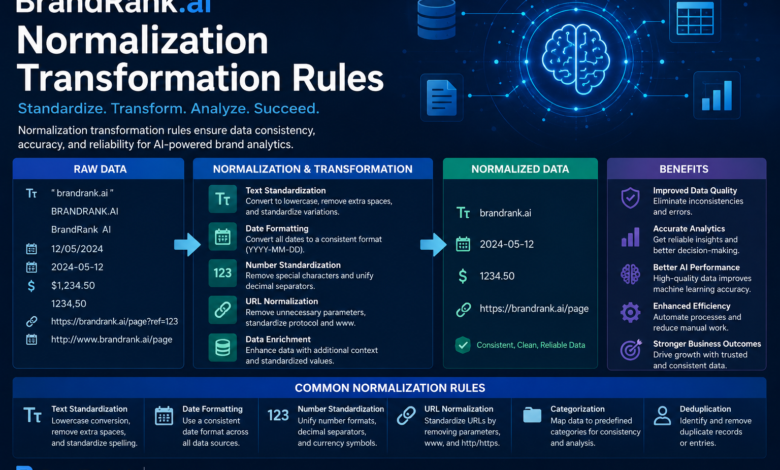
Data is the foundation of every artificial intelligence system. Whether organizations are analyzing customer behavior, tracking brand performance, evaluating search visibility, or generating business insights, the quality of data directly impacts the accuracy of the results. However, raw data often comes from multiple sources and formats, making it difficult to process effectively without proper standardization.
This is where BrandRank.ai Normalization Transformation Rules become important. Normalization and transformation processes help convert inconsistent data into a structured format that artificial intelligence systems can understand and analyze efficiently. These rules ensure that data remains accurate, consistent, and useful for generating meaningful insights.
As AI-powered platforms continue to evolve, normalization techniques are becoming increasingly essential for businesses seeking reliable analytics and better decision-making. Understanding how normalization transformation rules work can help organizations improve data quality, optimize performance, and maximize the value of their AI-driven strategies.
What Are BrandRank.ai Normalization Transformation Rules?
Normalization transformation rules refer to the methods and processes used to standardize data before it is analyzed by artificial intelligence systems.
Data often originates from various sources such as:
- Search engines
- Social media platforms
- Customer databases
- Marketing campaigns
- Analytics tools
- Business applications
Because each source may use different formats, structures, and naming conventions, AI systems require a standardized framework to interpret the information correctly.
Normalization transformation rules help:
- Remove inconsistencies
- Standardize values
- Improve data quality
- Reduce duplication
- Enhance analytical accuracy
- Support machine learning processes
Without normalization, AI systems may struggle to identify patterns or generate reliable results.
Why Data Normalization Matters
Modern organizations rely heavily on data-driven decisions. Poor-quality data can lead to inaccurate reports, misleading insights, and ineffective business strategies.
Normalization provides several important benefits.
Improved Accuracy
When data follows consistent formatting rules, analytical systems can process information more accurately.
Better Comparisons
Standardized data allows organizations to compare metrics across multiple sources without inconsistencies.
Enhanced Machine Learning Performance
AI algorithms perform more effectively when data is clean, organized, and properly structured.
Reduced Errors
Normalization minimizes the risk of duplicate records and formatting issues.
Faster Processing
Consistent data structures improve system efficiency and reduce processing complexity.
These advantages make normalization a critical component of modern AI platforms.
Understanding Data Transformation
While normalization focuses on consistency, transformation involves modifying data into formats suitable for analysis.
Transformation processes may include:
- Data cleaning
- Format conversion
- Value standardization
- Categorization
- Data enrichment
- Aggregation
Together, normalization and transformation create a reliable foundation for AI-powered analytics.
Common Normalization Rules
Organizations implementing AI systems often use several normalization techniques.
Text Standardization
Text data frequently contains inconsistencies.
Examples include:
- Uppercase and lowercase variations
- Spelling differences
- Abbreviations
- Special characters
Normalization rules convert these variations into a standardized format.
For example:
“BrandRank AI”
“brandrank ai”
“BRANDRANK.AI”
May all be transformed into a single standardized representation.
Date Formatting
Different systems often store dates in different formats.
Examples:
- MM/DD/YYYY
- DD/MM/YYYY
- YYYY-MM-DD
Normalization ensures that all dates follow a consistent structure.
Numerical Data Standardization
Numbers may appear in multiple formats depending on the source.
Examples include:
- Currency symbols
- Decimal separators
- Percentage values
Standardization ensures accurate calculations and comparisons.
URL Normalization
Web analytics platforms frequently normalize URLs to prevent duplicate tracking.
This process may involve:
- Removing unnecessary parameters
- Standardizing protocols
- Eliminating duplicate paths
Consistent URLs improve reporting accuracy.
The Role of AI in Data Transformation
Artificial intelligence significantly enhances normalization processes.
Traditional data cleaning methods often require manual effort and extensive configuration.
AI-powered systems can automate many tasks, including:
Pattern Recognition
Machine learning algorithms identify common data patterns and inconsistencies.
Entity Matching
AI can recognize when different entries refer to the same entity.
Automated Classification
Systems can categorize data automatically based on predefined rules.
Error Detection
AI helps identify anomalies and potential data quality issues.
These capabilities improve efficiency while reducing manual workload.
Benefits for Brand Analytics
Platforms like BrandRank.ai may use normalization transformation rules to improve brand-related insights.
Benefits include:
Accurate Brand Monitoring
Consistent data improves tracking across multiple channels.
Improved Search Visibility Analysis
Standardized metrics provide more reliable SEO insights.
Better Customer Understanding
Normalized customer data enables deeper behavioral analysis.
Enhanced Reporting
Businesses receive clearer and more actionable reports.
Stronger Competitive Intelligence
Standardized competitor data supports more meaningful comparisons.
Reliable analytics depend heavily on high-quality normalized data.
Challenges in Data Normalization
Although normalization provides significant benefits, organizations may encounter challenges.
Large Data Volumes
Managing massive datasets requires advanced processing capabilities.
Multiple Data Sources
Different systems often use unique structures and standards.
Real-Time Processing
Modern businesses increasingly require instant data updates.
Data Quality Issues
Incomplete or inaccurate information can complicate normalization efforts.
Changing Business Requirements
Organizations must continuously adapt transformation rules to support evolving goals.
Effective AI systems address these challenges through automation and intelligent processing techniques.
Best Practices for Normalization Transformation Rules
Organizations seeking to improve data quality should follow several best practices.
Establish Clear Standards
Define formatting rules for all major data types.
Automate Where Possible
AI-powered tools can reduce manual effort and improve consistency.
Validate Data Regularly
Continuous monitoring helps identify quality issues before they affect analysis.
Maintain Documentation
Documenting transformation rules improves transparency and consistency.
Review and Update Rules
Data requirements change over time, making regular updates essential.
These practices support long-term data reliability.
Future Trends in AI Data Normalization
As artificial intelligence continues advancing, normalization processes are becoming more sophisticated.
Several emerging trends include:
Intelligent Data Mapping
AI systems can automatically identify relationships between datasets.
Self-Learning Transformation Models
Future systems may continuously improve normalization accuracy through machine learning.
Real-Time Standardization
Businesses increasingly require instant data processing capabilities.
Predictive Data Quality Monitoring
AI may proactively identify potential issues before they occur.
Enhanced Cross-Platform Integration
Future normalization systems will better support data sharing across multiple technologies.
These innovations will help organizations manage increasingly complex data environments.
Why BrandRank.ai Normalization Transformation Rules Matter
Data quality directly influences the effectiveness of artificial intelligence systems. Organizations that invest in proper normalization and transformation processes gain access to more accurate insights, stronger analytics, and better decision-making capabilities.
BrandRank.ai normalization transformation rules help ensure that information remains structured, reliable, and ready for advanced analysis. By reducing inconsistencies and improving data integrity, these rules support everything from brand monitoring and SEO analysis to customer intelligence and business strategy development.
As AI adoption continues growing across industries, effective data normalization will remain a critical factor in achieving meaningful results.
Conclusion
BrandRank.ai Normalization Transformation Rules represent an essential aspect of modern data management and artificial intelligence. By standardizing and transforming information into consistent formats, organizations can improve analytical accuracy, enhance machine learning performance, and generate more reliable business insights.
In an era where data drives competitive advantage, normalization is no longer optional. It has become a foundational requirement for successful AI implementation. Businesses that prioritize data quality and adopt intelligent normalization strategies will be better positioned to unlock the full potential of artificial intelligence and digital innovation.